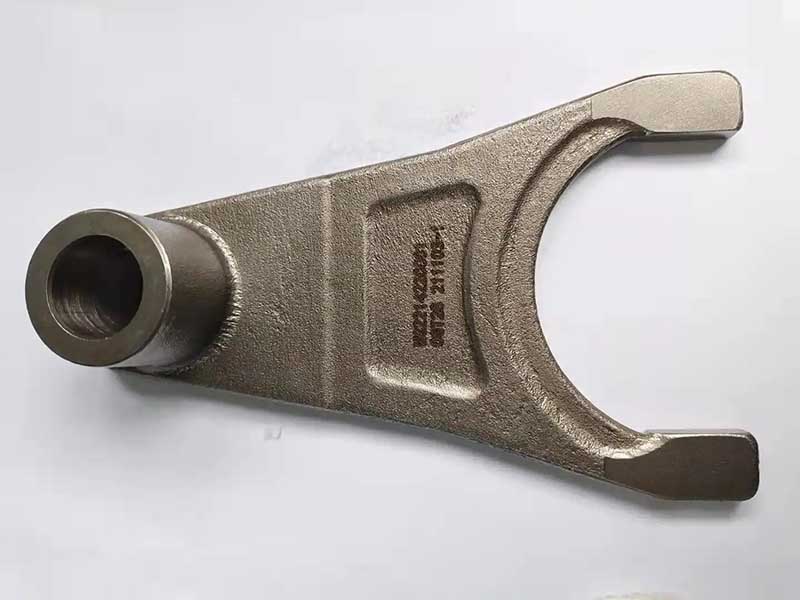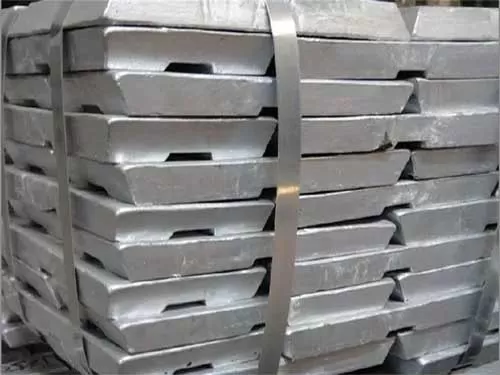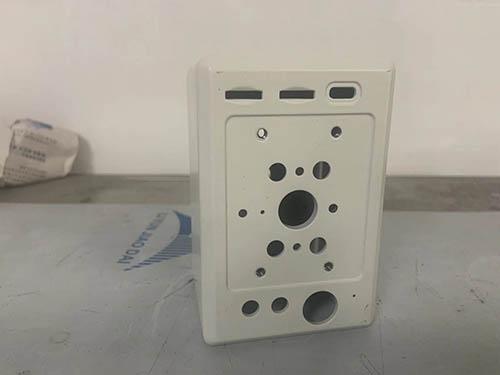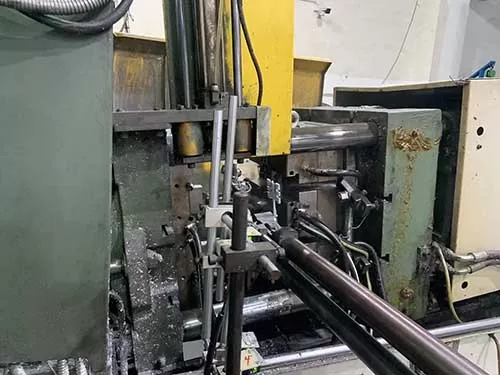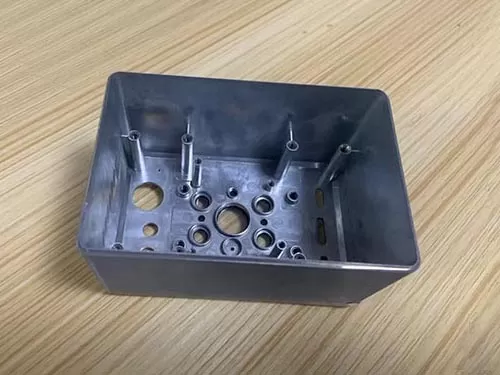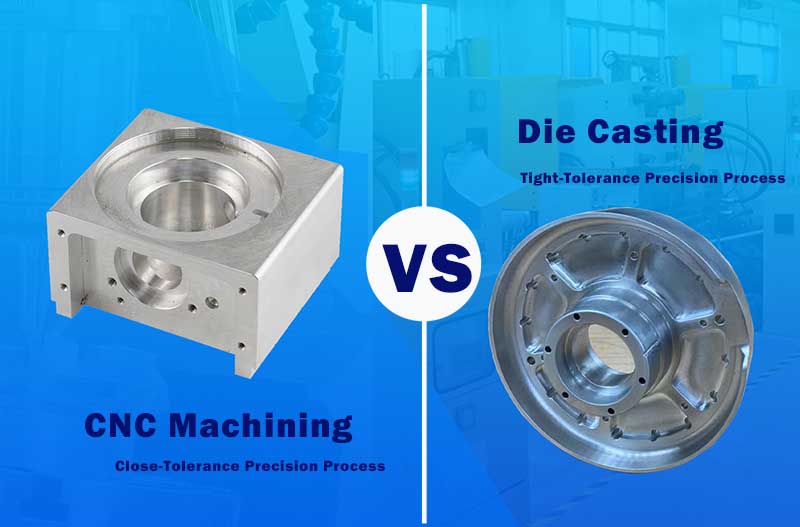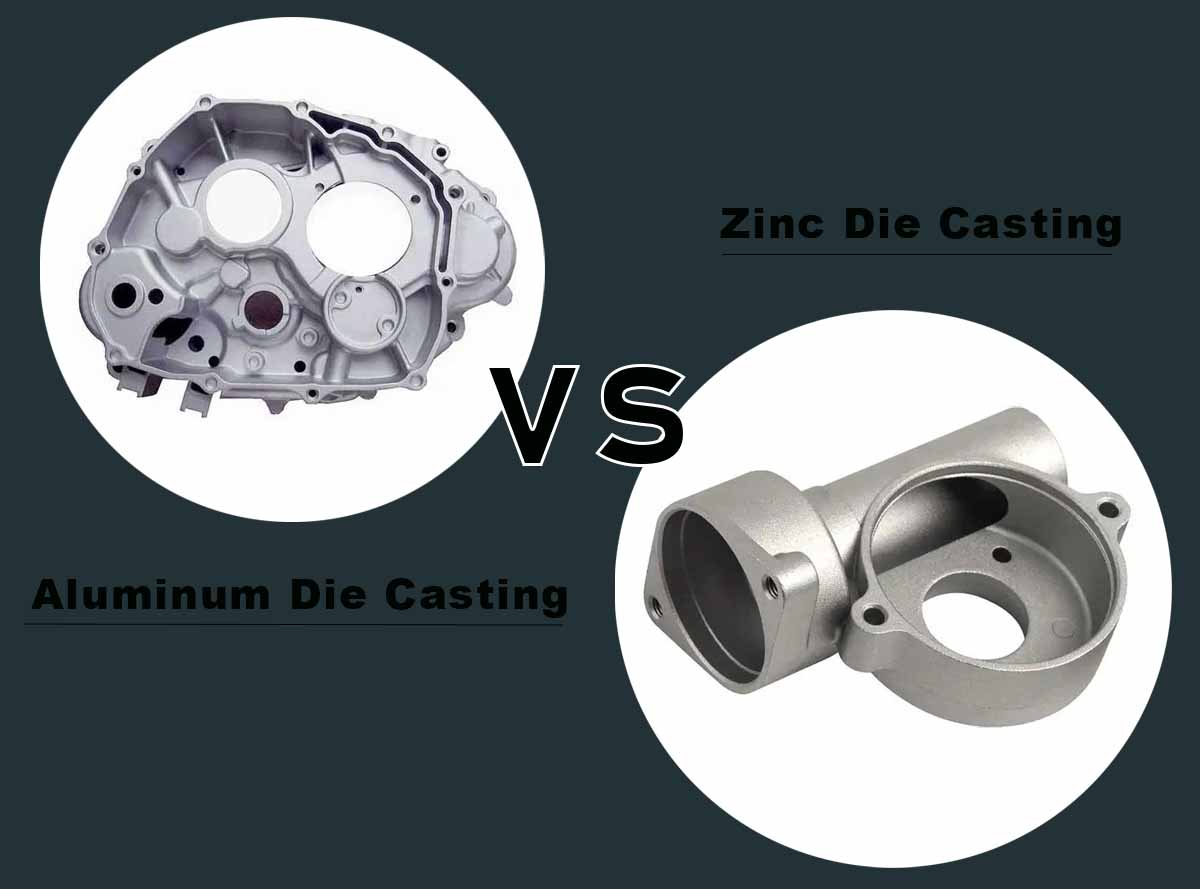
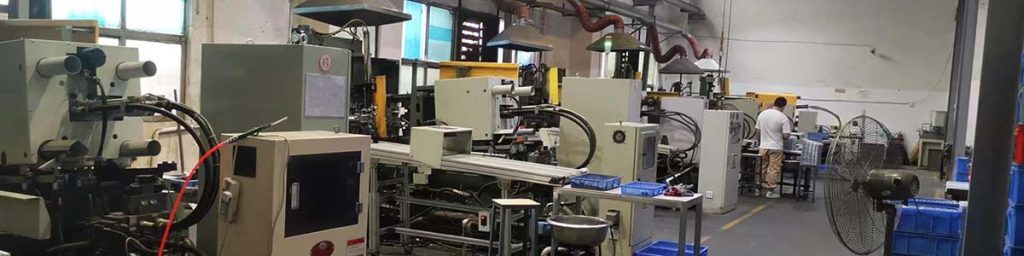
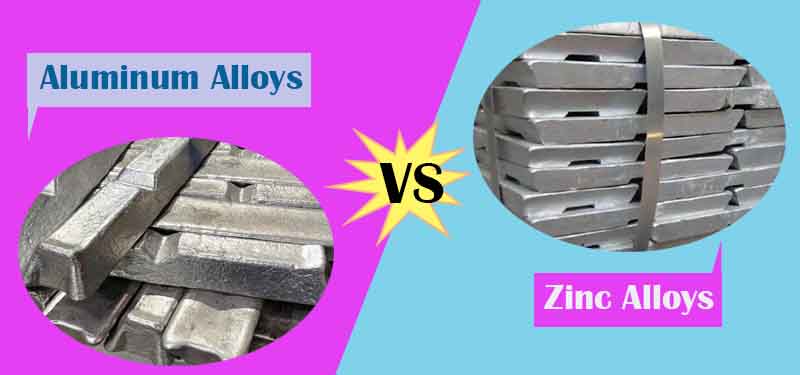
Aluminum alloy 6061-T6 Vs Zamak 3 Alloy makes us having a clear cognition for die casting applications. Aluminum 6061-T6 is a versatile heat-treatable aluminum alloy in the Al-Mg-Si family. It is used widely for precision cnc machining, extrusion and assembly structural frames. Also aluminum alloys have the properties of lightweight, excellent corrosion resistance, high strength and premium mechanical process properties. However, Zamak 3) is melting point metal, excellent metal fluidity, excellent mechinability. Though Hot chamber die casting, the zinc alloy can be formed into versatile precision parts for various many industries. It is higher weight(~6.6 g/cm³) than aluminum alloys(~2.7 g/cm³). The both types of metal alloys have their own advantages and benefits, let us have them a detail anylitics.
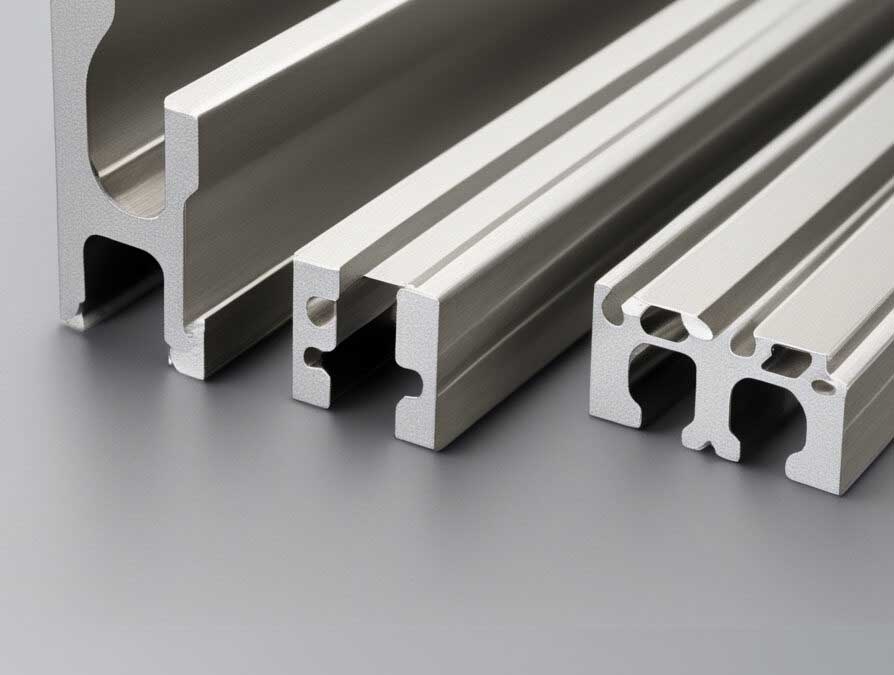
Overview Of Aluminum Alloy 6061-T6
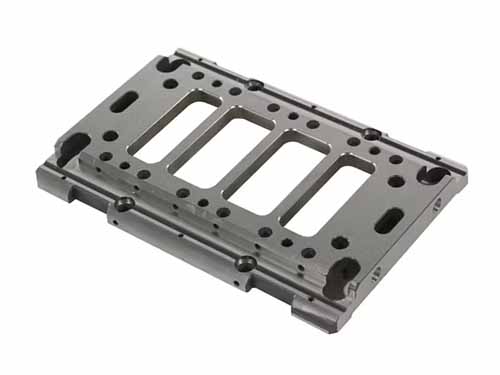
The common aluminum has a light weight, good strength,better ductility and mechanical process properties. It is suitable for precision cnc machining process and ensure close-tight-tolerance dimension without any tooling investment, even to complete first article inspection in a few hours only.
Aluminum Alloy 6061-T6 Chemical Composition
6061 Aluminum Alloy is a widely used Al-Mg-Si aluminum alloy known for its good strength, corrosion resistance, weldability, and machinability.
| Element | Composition (%) | Function |
|---|---|---|
| Aluminum (Al) | Balance (~95.85–98.56%) | Base metal |
| Magnesium (Mg) | 0.80–1.20% | Improves strength and corrosion resistance |
| Silicon (Si) | 0.40–0.80% | Forms Mg₂Si strengthening phase |
| Copper (Cu) | 0.15–0.40% | Increases strength and hardness |
| Chromium (Cr) | 0.04–0.35% | Improves corrosion resistance and grain control |
| Zinc (Zn) | ≤0.25% | Minor strengthening element |
| Titanium (Ti) | ≤0.15% | Grain refinement |
| Manganese (Mn) | ≤0.15% | Improves structure stability |
| Iron (Fe) | ≤0.70% | Impurity control |
| Other elements | ≤0.05 each, ≤0.15 total | Trace elements |
Features
- Hardness & Ideal Wear Resistance: Aluminum 6061-T6 Hardness is up to 95 hb.
- Tensile Strength: 310 MPa
- Excellent Corrosion Resistance: The alloy naturally forms a protective oxide layer, giving it good resistance to atmospheric corrosion.
- Process Routing: precision cnc machinings, extrusions and frame assembly structural frames.
- Excellent Machinability: The common aluminum alloy is chosen for some close-tight dimesional components through CNC machining, and used for automotive, communication, aerospace, marine, military and consumer electronics.
- High Strength-to-Weight Ratio: The alumium has far low density, 2.7 g/cm³, which lightweight. and belong to almost aluminum grade material, and easily machined and attractive lightweight precision components.
- Excellent Thermal Management: Aluminum fast heat dissipation makes more cnc machined parts used for communication and consumer electronic. The excellent thermal conductivity will meet the requirements of electric module working.
- Good Electric Conductivity: 6061-T6 typically has an electrical conductivity of approximately 40% IACS at room temperature.
- Excellent Surface Finishing: Allow versatile finishing treatments, and improve aesthetics and prolong the life span.
Applications Range
6061 aluminum is most common aluminum alloy, used where a balance of strength, weight, and corrosion resistance is needed. It’s especially dominant in automotive, aerospace, marine, and general fabrication.
- Aerospace & Aviation: Aerospace components such as wing fittings, spacers & brackets and hydraulic body.
- Automotive Components: Frames and chassises, suspension components, heat exchanger and radiater, EV battery enclosures.
- Marine Applications: Boat hulls and decks, marine fittings and hardware.
- Construction And Archeticture: Door and window frames, decorative curtain, roofing & cladding. The 6061 aluminum alloy can be extruded into some complex cross side long striped material due to its excellent ductility and softness.
- Consumer Goods & Electronic Enclosures: Sport bike frame, Camera body, smart phone and notebook casings.
- Industrial Applications: Piping and tubing fittings, robotic hand and arms, work tables and conveys system.
Overview, aluminum 6061-T6, which has excellent thermal management, lightweight and premium mechanical process achieve its wide applications.
Common Zamak 3 Alloy
Zamak 3 is the most popular castable metal alloy among zinc alloy family, almost purified zinc, best metal fluidity and excellent ductility, allow process thin-walled and intricate internal structural high precision die casting components for communication, consumer electronics and automotive. Especially custom zinc die casting project from precision zinc die casting manunfacturer requires more complex structual design.
Zamak 3 Chemical Composition
Zamak 3 has excellent dimensional stability, casting fluidity, corrosion resistance, and surface finishing performance. These precision zinc die casting components serve in automotive components, electronic housings, locks, handles, and industrial hardware.
| Element | Composition (%) | Function |
|---|---|---|
| Zinc (Zn) | Balance (~96.0%) | Base metal |
| Aluminum (Al) | 3.9 – 4.3% | Improves strength, hardness, and castability |
| Magnesium (Mg) | 0.025 – 0.05% | Improves grain structure and dimensional stability |
| Copper (Cu) | ≤ 0.25% | Limited to maintain ductility and corrosion resistance |
| Iron (Fe) | ≤ 0.10% | Impurity control |
| Lead (Pb) | ≤ 0.005% | Impurity limit |
| Cadmium (Cd) | ≤ 0.005% | Impurity limit |
| Tin (Sn) | ≤ 0.003% | Impurity limit |
Features
Zamak 3 is the most common zinc alloy among the family of zinc alloys, which is used for various metal parts in many industries, such as automotive, appliance, decoration and architecture, communication ect. but it also its own disadvantages.
- Heavy: 2.5x denser than aluminum, making it unsuitable for weight-sensitive applications. Its density is 6.6 g/cm³
- Hardness: Zamak 3 hardness is also 90 hb, is a bit higher than aluminum 6061-T6.
- Tensile Strength: 320 MPa
- Melting Point Metal: The metal alloy begin melting at 380℃, Low heat energy consumption in the mass production and fast production cycle.
- Thermal Conductivity Properties: Thermal conductivity around 110–120 W/m·K,
- Electrical Conductivity Properties: has moderate electrical conductivity, and provides approximately 26–28% IACS electrical conductivity.
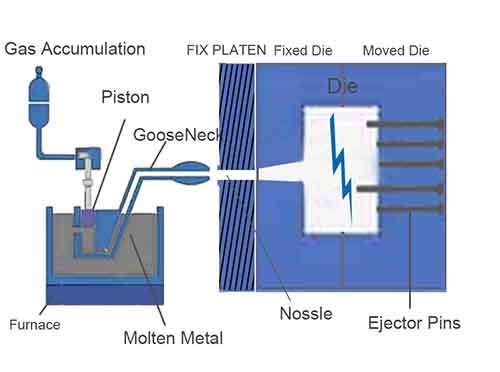
- Process Routing: Hot chamber die casting process, and requires low melting temperature operation.
- Minimal Secondary Operations : Zamak 3 has excellent metal fluidity and ductility, can creates very smooth surface finish, lead to its secondary operations reduced, and easy to treat through plating and powder-coating.
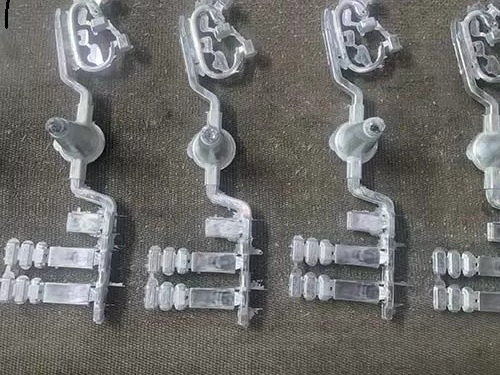
- Ideal for high precision and ultra-precision miniature parts: Short cooling time and excellent metal fluidity meet filling the metal flow into everywhere of the cavities fastly, and ideal for high precision and ultra-precision miniature parts at high-efficiency zinc die casting mass prodcution on scale.
- Finishing Treatments Required: Bare zinc parts have poor corrosion resitance and oxidation at moisture and humid conditions, so the zinc parts allow finishing treatments.
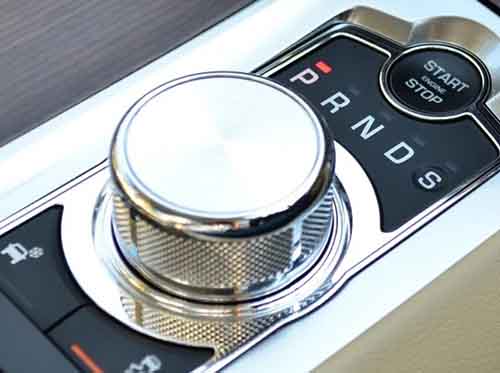
Applications Range Of Zamak 3 Alloy
Zamak 3 is the go-to alloy for high-volume, cost-efficiency die-cast parts where strength is not critical. It dominates in consumer goods, automotive trim, and decorative hardware.
- Consumer Goods & Hardware: Zippers, buckles, and fasteners, with good hardness and good mechanical properties.
- Automotive Interior and Exterior & Electrical Components: Handle, seatbelt buckles, sensor enclosures, with high corrosion and wear resistance.
- Decorative & Architectural Uses: Furniture hardwares, lighting fixtures and lamp boxes, plumber fixtures,
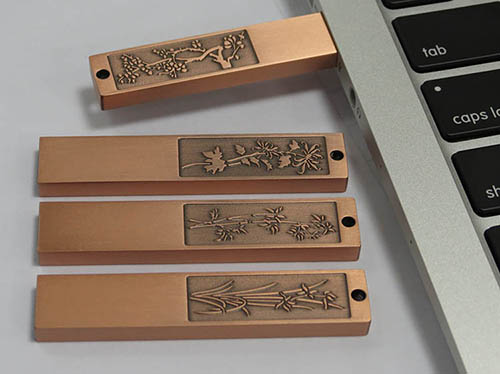
- Electronics & Small Devices: Usb flash drive disk housings, wearable device enclosures and electromagnetic shielding cover.
In summary, Zamak 3, the most common castable material, and excel at high volume production of miniature high precision cast parts, provide consistent high quality part at cost-efficiency. And meet the requirement of high volume of precision components.
Comparison For Aluminum Alloy 6061-T6 Vs Zamak 3 Alloy
We can learn in further the detail from the below tablet from aluminum alloy 6061-T6 vs zamak 3 alloy
| Items | Aluminum Alloy 6061 | Zamak 3 |
|---|---|---|
| Density | Far LightWeight , as 2.7g/cm³ of density, strong strength, high ductility. | Heavy weight as 6.6g/cm³ of density, strong lower temperature structural stability |
| Hardness | 95 HB | 90 HB |
| Tensile Strength | 310 MPa | 320 Mpa |
| Corrosion Resistance | Superious corrosion resistance, thicker oxidated layer, protect the substance spoiled and isolate any chemal reaction from oxygen. And strong anti-aging property. | Good corrosion resistance, but thin oxidated layer, fatigue is lower, the metal part properties is downgraded as aging. This is decided by low temperature structural stability. |
| Conductivity | Excellent Thermal and electrical Conductivity, it can be used for heat dissipations and connectors for electric components, | EMI shielding Unique feature, it can be used for enclosures and housings for sensors and IoT equipment precision components. |
| Process Approach | Allows tight-tolerance cnc machining, extrusion and assembly structural frames. | Suitable for high precision die casting parts, focus on small and medium size metal die casting parts, allow tight tolerance accuracy dimensions. Typical tolerance is up to ±0.02mm. |
| Application Environment | 6061 aluminum alloy is used at high temperature environments and posses high-temperature resistance. | The alloy metal is used for many metal parts in normal temperature. Therefore, the metal parts can maintain strong metal tensile strength stability. |
| Finishing Treatment | Accept various colors anodized, and protect the status for long time. | Accept plating , powder-coating, painting. |

Need Zinc or Aluminum Die Casting for Your Project?
TS Die Casting Technology provides:
✓ Zinc alloy die casting
✓ Aluminum die casting
✓ Mold design and manufacturing
✓ CNC machining
✓ Surface finishing
✓ OEM mass production
Conclusion
Comparision from aluminum alloy 6061-T6 vs zamak 3 alloy, they have their respective advantages and disadvantages. From metal properties to applications, The two types of complete metal alloys will can be processed into proper metal cast parts and used in many industries. Depends on their functions and unique properties, these cast parts can contribute our leap technology and modern industrial devolpment.
FQA
Q1: Is Zamak 3 stronger than 6061 aluminum?
6061 aluminum has better strength-to-weight performance, about the density of 2.7g/cm³, while Zamak 3 provides better casting capability, equal hardness and dimensional stability for precision die casting parts.
Q3: Which is better for automotive components, Aluminum 6061-T6 machined parts Or Zamak 3 die casting parts ?
Aluminum 6061 is preferred for lightweight medium and large sized structural components in automotive industry, and excellent thermal and electrical conductivities, while Zamak 3 is preferred for precision miniature automotive components such as housings, brackets and decorative parts, and EIM shielding functionalities better.