


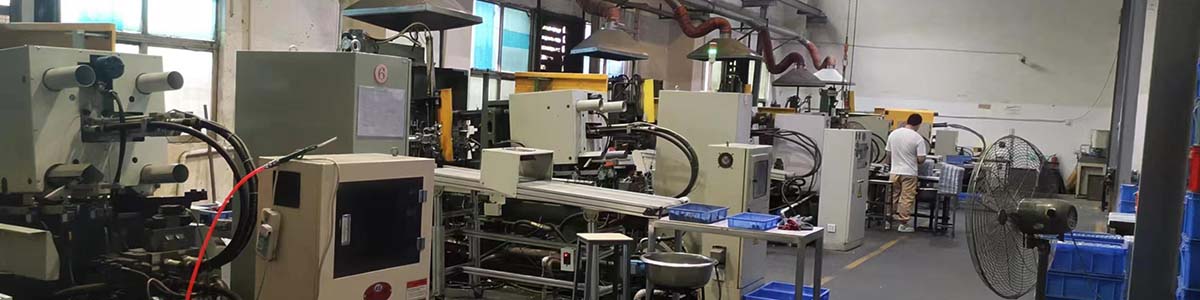
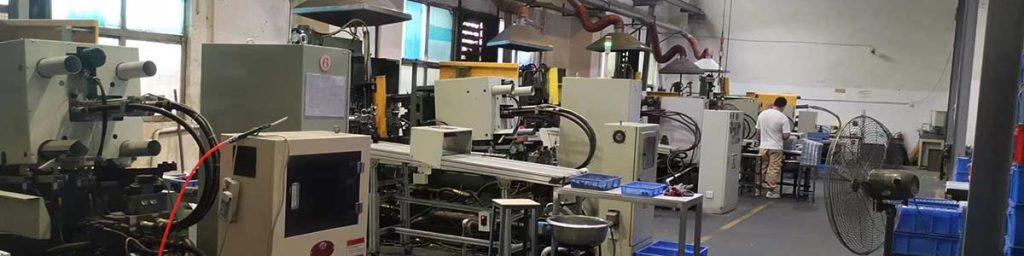
Tscasting Technology as one die casting manufacturer, This is one of professional die casting industrial factory, main process zinc cast products. There are advanced hot chamber die casting machines, which is equipped with robot hand, build a set of automatic die casting production line. However hot chamber die casting machines is good at casting medium and small size metal products. So our company is specializing for electric components and gift. At present, The die casting manufacturer main supply metal car key cover in automotive industry and electric components in communication industry.
Precision Engineered: The Art and Science of Modern Metal Die Casting
In the world of manufacturing, few processes offer the blend of high-volume efficiency, intricate detail, and structural integrity quite like metal die casting. This sophisticated metal casting process is the backbone of countless products, from the smallest zinc alloy components for automotive applications to the durable housings of consumer electronics. For businesses seeking a reliable metal casting service business, Die casting manufacturer provide precision engineering design and care die fabrication. understanding the nuances of this technology is key to bringing robust, high-quality parts to market.
The Die Casting Advantage: Precision at Scale
At its core, die casting involves forcing molten metal under high pressure into reusable steel molds, known as metal casting service dies. This method is renowned for its ability to produce parts with exceptional dimensional accuracy, smooth surfaces, and complex geometries that would be costly or impossible with other techniques. The result is a wide range of precise metal die casting products that meet stringent specifications across various metal die casting service industries.
Two primary technologies dominate the field: hot chamber die casting technology, which is highly efficient for metals with low melting points like zinc, and cold chamber casting, used for aluminum and other higher-temperature alloys.
Zinc Alloy: The Versatile Performer
Among the most popular materials for this process is zinc alloy. Renowned for its strength, durability, and excellent finishing properties, it’s a go-to choice for many applications. A specialized zinc casting service can produce everything from delicate zinc casting service jewelry and promotional zinc casting gifts to critical mechanical components. The global demand is met by expert zinc die casting service factory locations worldwide, including a robust zinc casting service in China for cost-effective production, high-precision zinc die casting service from Japan, and a strong industrial metal die casting service Germany and zinc alloy die casting service Europe presence for the regional market.
Die Casting Manufacturer Comprehensive Capacity : The Prototype Pathway
Before committing to full-scale production, developing a best prototype is a critical step. This is where expert prototype services bridge the gap between design and manufacturing. Through advanced CNC machining prototype service and CNC prototype service capabilities, engineers can create functional die casting prototypes that accurately represent the final part.
This phase is crucial for testing form, fit, and function. Whether you need a USB hard drive prototype housing service, Portable USB housing prototype fabrication service, or a plastic rapid prototyping service, these prototype companies ensure your design is flawless before the metal casting service dies are ever cut. For those in specific regions, seeking a USB hard drive prototype service europe or a USB flash drive prototype service usa can streamline logistics and communication.
Ensuring Excellence: The Non-Negotiable of Quality Control
A commitment to rigorous die casting quality control is what separates a good supplier from a great one. From the initial metal casting process to the final casting part deburring service, every step must be monitored. This includes meticulous inspection of zinc components for automotive and other high-stakes applications to ensure they meet all safety and performance standards. For any potential partner, reviewing their metal die casting service FAQ is a great way to understand their commitment to quality.
Choosing the Right Global Partner
The landscape of metal die casting service is truly global. Companies can source from a cheap metal die casting service while still maintaining quality, or partner with specialized prototype service manufacturers for low-volume initial runs. Whether your project requires a metal die casting service Vietnam for competitive pricing or a Japan prototype service for technical precision, the key is to find a die casting manufacturer with a proven track record, transparent processes, and a commitment to being a top prototype services company.
In conclusion, the journey from a concept to a mass-produced component is a sophisticated dance of technology, material science, and quality assurance. By leveraging the expertise of a dedicated metal casting corporation that offers everything from rapid prototype service to full-scale production, innovators can confidently bring their designs to life, knowing that every detail has been precision-engineered for success.
Advantages Of Zinc Die Casting
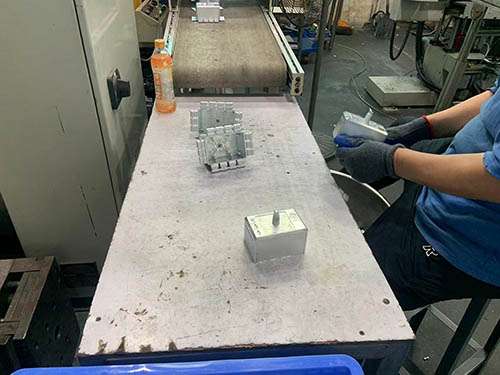
Zinc die casting is widely used in various industries due to its excellent mechanical and unique metal properties. So zinc die casting manufacturer provide high quality zinc part to its business partner and potential clients. Since Zinc die casting present the key advantages.
1. High Dimensional Accuracy
- Zinc alloys can achieve tight tolerances and maintain consistent dimensions, even in high-volume production.
- Ideal for components requiring precision without extensive machining.
2. Excellent Casting Fluidity
- Zinc flows easily into molds, allowing for thin walled, complex geometries, micro-features, and intricate designs.
- Enables integration of multiple parts into one component, reducing assembly steps.
3. Superior Strength & Toughness
- Stronger and more impact-resistant than many other die cast metals.
- Offers a good balance of hardness, rigidity, and ductility.
4. Longer Tool Life
- Zinc has a lower melting point compared to aluminium or magnesium.
- Results in less wear on dies and longer mold life, improving cost efficiency.
5. Cost-Effective Production
- Faster cycle times and reduced machining requirements lower overall production cost.
- Suitable for high-volume manufacturing.
6. Excellent Surface Finish
- Produces smooth, high-quality surfaces that require minimal finishing.
- Easily plated, powder-coated, painted, or polished for decorative products.
7. Good Corrosion Resistance
- Zinc alloys are naturally resistant to corrosion, increasing product lifespan.
8. Electrical & Thermal Conductivity
- Useful for electrical components, connectors, and heat-dissipating devices.
9. Easily Recyclable
- Zinc alloys can be re-melted and reused without losing properties, supporting sustainable production.
Common Applications
- Automotive components
- Hardware fittings & locks
- Electrical housings & connectors
- Consumer electronics
- Toys and decorative items
Advantages For Aluminum Die Casting
Here are the key advantages of aluminum die casting, especially compared with other casting materials like zinc, magnesium, and steel. The below key points prove the obvious advantages for aluminum die casting.
🔹 1. Lightweight yet Strong
- Aluminum alloys offer an excellent strength-to-weight ratio.
- Ideal for automotive, aerospace, EV, and lightweight structural parts.
🔹 2. Excellent Corrosion Resistance
- Naturally forms an oxide layer for protection.
- Suitable for outdoor applications, marine environments, and long-life components.
🔹 3. Good Thermal & Electrical Conductivity
- Excellent heat dissipation performance.
- Widely used in heat sinks, LED housings, and power system components.
🔹 4. High Melting Point → Better for High-Temperature Applications
- Works well in parts exposed to heat or engine environments.
- More thermally stable than zinc or magnesium.
🔹 5. Suitable for Thin-Wall and Complex Components
- Good fluidity allows casting of intricate shapes and multi-functional designs.
- Reduces the need for multi-part assembly.
🔹 6. Very Good Strength-to-Weight Cost Ratio
- Production cost is relatively low for large-volume manufacturing.
- Components can be lightweight without sacrificing structural performance.
🔹 7. Good Machinability & Surface Finishing Options
- Can be easily CNC-machined, drilled, tapped, or polished.
- Supports various finishing processes:
✓ Powder coating
✓ Anodizing
✓ Sandblasting
✓ Painting
🔹 8. Widely Available & Recyclable
- Aluminum is globally abundant and 100% recyclable.
- Supports sustainable, low-carbon manufacturing requirements.
From the above advantages , die casting manufacturer catch hold of the previous business opportunity to grow itself, and provide high quality zinc die casting parts across many industries rely on its advantages.
There is a clear comparison between aluminum die casting vs zinc die casting applications, matched with their material performance and industry usage — especially useful for manufacturers like you when positioning product advantages.
Key Differences Affecting Application Direction
| Feature | Zinc Die Casting | Aluminum Die Casting |
|---|---|---|
| Strength & hardness | Higher hardness, very good strength | Strong but lower hardness than zinc |
| Thin-wall capability | Excellent ultra-thin & precise | Good, but not as fine as zinc |
| Corrosion resistance | Very good | Good (improves with surface treatment) |
| Melting point | Low → longer die life → cost effective | Higher → shorter die life |
| Weight | Heavier than aluminum | Lighter for lightweight applications |
| Conductivity | Excellent electrical conductivity | Good thermal conductivity |
| Price | Lower raw material + tooling cost | Economical but tooling wear is higher |
Applications for Zinc Die Casting
Zinc is ideal when high precision + complex structure + small/medium size as its features.
🔹 Automotive & Transportation
- Door locks, actuators, handles, seat belt buckles
- Precision gears, bracket housings, interior functional components
🔸 Reason: dimensional accuracy, impact resistance, smooth finish
🔹 Electronics & Communication
- 5G device frames, connectors, shielding shells
- Antenna components, heat dissipating parts
🔸 Reason: excellent EMC shielding + fine structural molding
🔹 Consumer & Household Products
- Zippers, buttons, hinges, latch components
- Smart door locks, hardware fittings
🔸 Reason: premium feel + surface finishing textures
🔹 Industrial & Machinery
Best Applications for Aluminum Die Casting
Aluminum suits large structures + lightweight requirement + heat management.
🔹 Automotive & EV Industry
- Engine & transmission housings
- Brackets, motor bases, ABS/ECU housings
🔸 Reason: light weight and good structural rigidity
🔹 Aerospace & UAV
- Drone frames, aircraft interior structural parts
🔸 Reason: weight reduction is critical
🔹 Heat Dissipation & Power Equipment
- LED light housings, inverter cases, power amplifier shells
🔸 Reason: thermal conductivity and durability
🔹 Industrial Engineering & Machinery
- Pump bodies, motor housings, pneumatic system components
🔸 Reason: strength-to-weight ratio & cost efficiency
When to Choose For Your Manufacturing Projects
Choosing between cold chamber die casting and hot chamber die casting depends mainly on the alloy type, product design requirements, production volume, and cost/efficiency expectations. Below is a clear guide — especially useful for die casting factories selecting process routes.
Cold Chamber Die Casting For Project
Cold chamber die casting is suitable for these high melting metal alloys, such as aluminum, copper, gold, silver and steel. Because these metal alloy can be molten with seperated furnace from the die casting machine, and require more heat energy to melt them, and these molten metal alloys have very high temperature(from 600℃~1800℃).Since the metal die castings are large size and heavy weigt, Forming the metal part needs longer time and low cooling, even through natural air cooling or lower cooling approches, avoid fast cooling causes cold shut and sudden shrankage lead to bend.
Based on Alloy Material
| Alloy | Recommended Process | Why |
|---|---|---|
| Zinc-Aluminum (ZA alloys) | Cold chamber (some) | Higher melting point, not suitable for hot chamber |
| Aluminum | Cold chamber only | High melting temp damages gooseneck |
| Brass / Copper | Cold chamber | Very high melting point & corrosive |
Applications
| Requirement | Choose |
|---|---|
| Large-sized castings, heavy chassis, bases and wheel | Cold chamber |
| High corrosion resistance at specific environments | cold chamber |
| High mechanical strength & structural parts | Cold chamber |
Hot Chamber Die Casting For Project
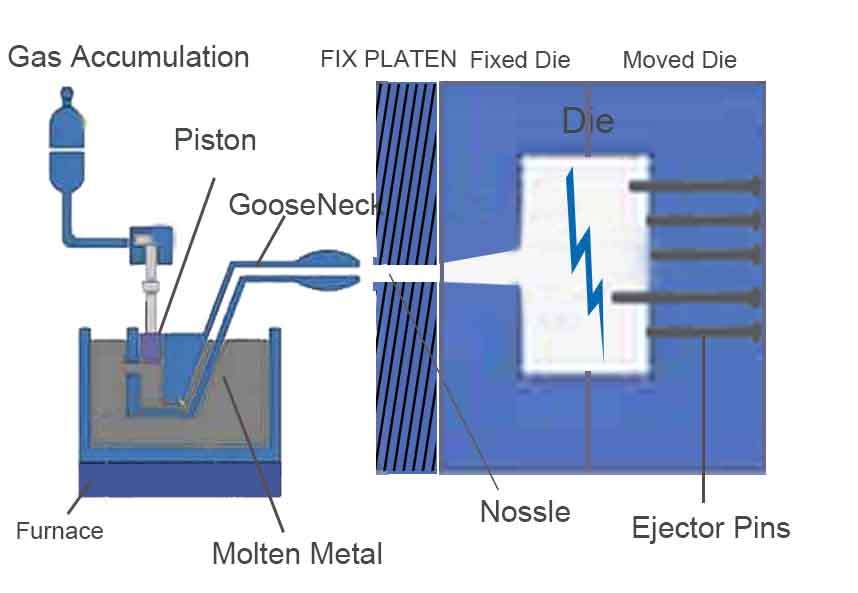
In the die casting, molten furnace is integrated with the machine. Feeding the metal material into pow, and melting metal material and overflow impurities and keep purified and steady temperature molten material for injection. Though gooseneck mechanism, The hydraulic piston pushes the molten metal into the preheated die. Then under high pressure the molten metal flow fills into the die fully, cooled and solidified, the die is opened, the desired cast part is ejected out of the die. So hot chamber die casting is ideal for low melting point metal, such as zinc, lead and tin alloys.
Choose Metal Alloy Materials
| Alloy | Best Choice |
|---|---|
| zinc, magnesium small precision products | Hot Chamber |
| You want fast cycle + short delivery | Hot Chamber |
| Main requirement is dimensional accuracy | Hot Chamber |
Applications
- Zinc smart lock components
- Connector housings
- 5G communication parts
- Gears, zipper heads, door hardware
- Automotive interior mechanisms
Tscasting Technology Offer Professional Zinc Die Casting Component Design Services
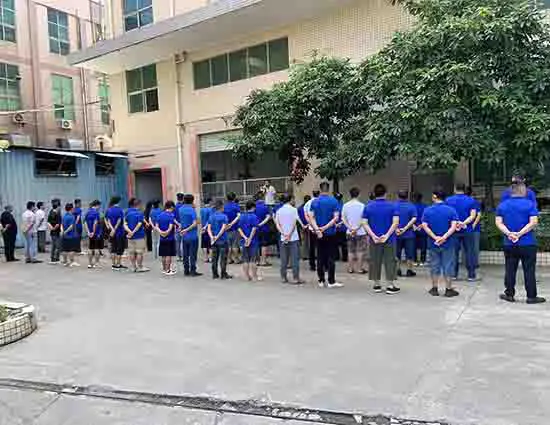
As one of professional zinc die casting manufacturers, Tscasting technology has a professional engineering design team that provides strong technical support is a major asset in zinc die casting. This team can work closely with clients to optimize component designs for manufacturability, troubleshoot technical issues, and incorporate client-specific requirements. We offer professional zinc die casting component design services, and down the following ability.
Various Zinc Alloy Composition Technology
We have a deep understanding of zinc alloys, including Zamak and ZA series alloys, and their specific properties and applications. And Ability to select the best zinc alloy for each application, balancing performance, cost, and environmental considerations.
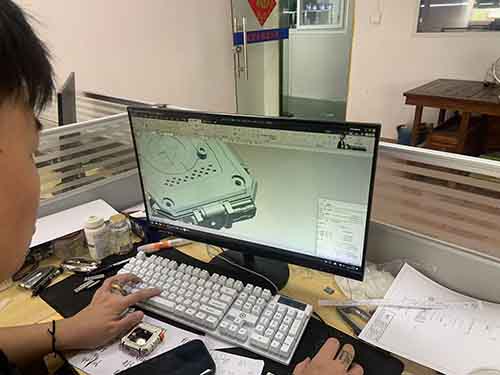
Advanced Design Software and Simulation Flow Tools
Our engineering team can use advanced CAD software to create precise, manufacturable designs. Using casting simulation tools to predict and resolve potential issues (e.g., air entrapment, shrinkage, material flow) before production. We also consider of die casting constraints involves of integrate features like draft angles, uniform wall thickness, and fillets, optimization for the die casting process.
Die Design and Optimization
Our ability to design dies that ensure efficient, high-quality mass production. including optimal gating, venting, and cooling systems. Expertise in die maintenance practices to extend die life and maintain cast part quality. Especially the precision die should be optimized and improved after prototype testing, and ensure enhancing the wear resisitance and the life span of the mold.
Problem Solving and Troubleshooting
Skilled in optimizing cycle times, material flow and retain a good melting material fluidity. Ensure the casting part has a uniform cooling. Ability to quickly identify and resolve issues, such as porosity or warping, ensuring consistent product quality.
Customization and Flexibility
We collaborate closely with clients, incorporating specific requirements and providing tailored solutions. especially the design of custom die casting component. Flexiblely designing components for a variety of industries, such as automotive, electronics, and consumer goods, meeting unique standards and specifications.
Continuous Improvement and Innovation
Ongoing research into new zinc alloys, coatings, or manufacturing technologies to stay competitive and offer advanced solutions to our clients. Being familiar with lean principles to reduce waste, optimize processes, and improve cost-efficiency.
IATF 16949 Normalizes Design and Process
Our factory had passed IATF 16949 Quality Management System Certification In December 2024, The IATF 16949 normalizes design and process in enterprise. It allows factory to produce some zinc die casting components in automotive industry exception of general hardware and plastic parts. IATF 16949 will carry through all process steps, from raw material source to finished product inspection and testing standard, each employee in factory should follow the industrial quality management system strictly, and ensure each step implement professional operation guide.
Cold Chamber Die Casting Process Guide
Some large size cast parts required for heavy industrial equipment components and countweight, die casting manufacturers often produce theseheavy weight die casting components with cold chamber die casting machine, similar with aluminum die casting process. The cold chamber die casting process runs the below steps one by one.
Step 1: Mold Preparation
The precise mold & die has a higher intial fabrication cost, and ensure a longer life time of it, and preheated and avoid cold shut and flow trace of cast part occurred. Die Release agent is sprayed after each cast cycle finished, and ensure the cast part ejected smoothly each time. Keep the halves of the mold is alignment with each other, and makes ejector pins eject the cast part from the core of the mold.
Step 2: Melting & Pouring
Melting these high melting points metal with high volume heat energy, and overflow the impurities within the metal, maintain the steady temperature molten metal in reservior. And have a sufficient preparation for pouring the molten metal. When molten metal is manually or automatically ladled, and poured into the cold chamber shot. This is mechanical action, replace labor operation, reduce some accidents for scald.
Step 3: Injection
The hydraulic or mechanical plunger forces the metal into the die cavity at high pressure, and fill the metal into the die fully quickly. These high melting points metal have a good fluidity, and forms high accuracy dimensions and fine surface finishing under high pressure. Pressure ensures strong integrated structure and fine surface of cast part, and minimizing post-process operations.
Step 4: Cooling & Ejection
The molten metal cools and solidifies inside the die when the metal is filled into the cavity of the die fully, The cold die casting machine starts water cooling system, cools the die, makes the metal inside the die solidifies in shorter time. The die opens, and ejector pins push out the casting part, and a cast cycle finished. The die close, proceed the next cast cycle.
Step 5: Trimming & Finishing
As-cast part require some post-processes for deburring. Depends on the specific requirements of process, the cast part may be machined. Secondary operations (machining, surface treatment) may be applied. Such as polishing, grinding, bead blastering and other trimming operations.
Overview Of Hot Chamber Die Casting
Hot Chambe Die Casting Process Guide
Molten Metal Supply
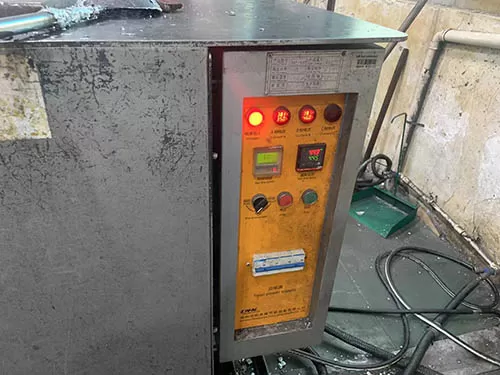
The furnace supply required temperature to melt the metal alloy and preparing storaged melton alloy. Preheating zinc alloy and maintain stable casting temperature. Zinc alloy melting point is 420 degrees or so, commonly the furnace melt the alloy with electricity power, it is environmental protection and hygiene. This melting reservior can overflow impurity inside molten zinc and purify zinc inside the vessel.
Injection of Molten Metal
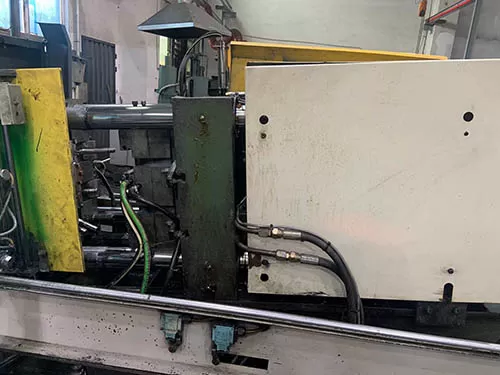
The piston pushes the molten metal through the gooseneck mechanism and into the mold cavity. With High pressure (typically 1,000–10,000 psi) drive the good fluid melton zinc alloy fills every detail of the mold fully. During injection of molten zinc alloy, ensure integrated structure and fine surface finish of cast part, using the proper venting and gates setting to extrudize entrapped air, avoid the porosity defects of the part.
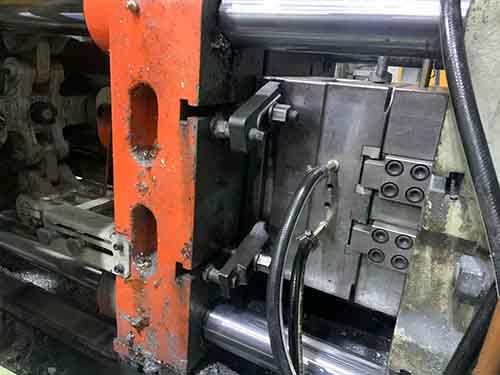
Cooling and Solidification
After the metal part cools and solidifies, The machine drive the mold open, and the part is ejected from the mold by usingejector pins. The cooling system should cool the casting part evenly, avoid the temperature shut down lead to shrinkage and warpping. Conduct real time monitoring data in casting process, ensure the casting process smooth running at repeative cycles.
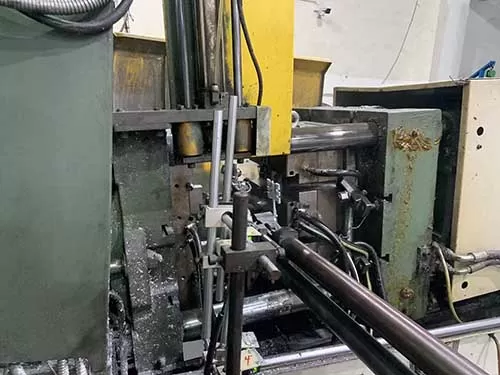
Ejection of the Casting
After the metal part solidifies, The machine drive the mold open, and the part is ejected from the mold by using ejector pins quickly. To ensure the part seperate from the mold in time and without any stick residues on the cores and cavities of the mold, Draft angles strategy is planned. Exception for the above, spraying release agent is neccessary.
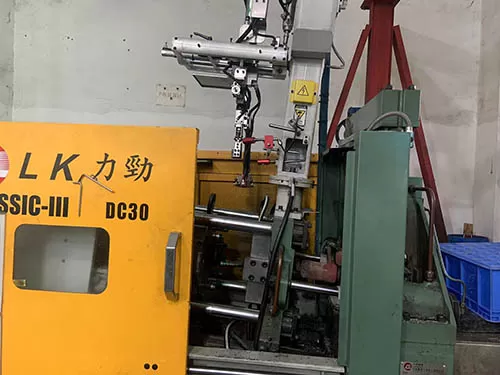
Cycle Production
The mold is lubricated, and the cycle begins again, allowing for high-speed, automated production. The hot chamber die casting can produce high quality zinc die casting parts repetively in short cycle. Every cycle cast needs a few seconds, mass production for zinc die casting components save more time and minimize the zinc material waste.