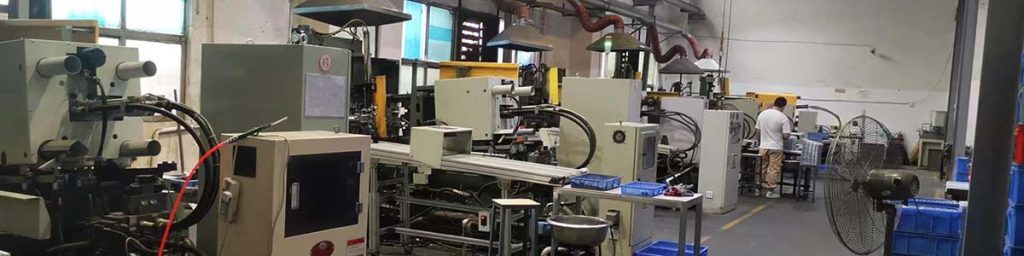
Choosing between CNC machining and die casting is one of the biggest cost decisions during product development. CNC machining has almost no tooling investment but relatively high machining cost per part. Die casting requires expensive steel tooling but dramatically reduces production cost during mass production. CNC machining vs die casting cost reflects the fundamental differences between two distinct manufacturing processes.
Engineers and product designers must determine which manufacturing process is more economical throughout a product’s life cycle. Selecting the right process can save manufacturers thousands—or even millions—of dollars in production costs while improving manufacturing efficiency and product quality.
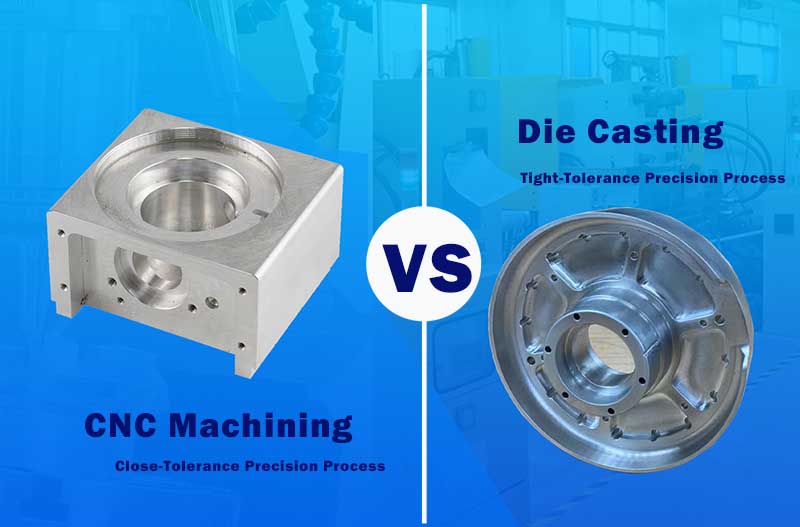
What is CNC Machining ?
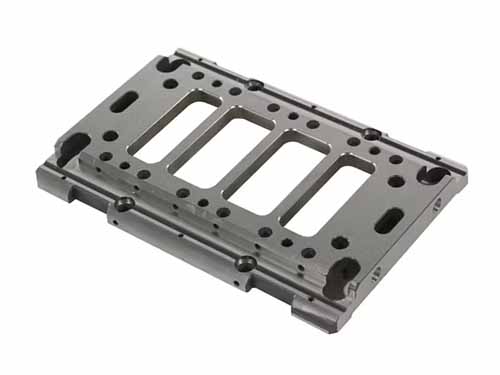
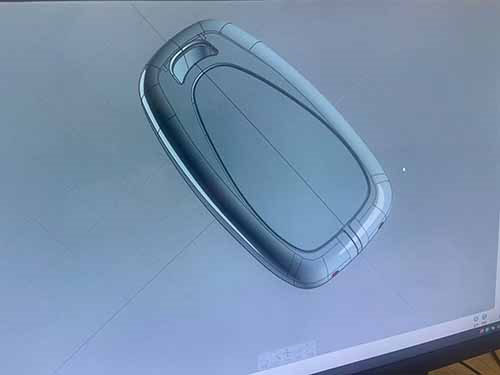
CNC machining is one of high precision machining process approaches, which removing the excess material on the part with edge-cutting cutting tooling, and form close-tolerance dimensional shaped part with very smooth surface roughness. At first phrase, engineers require designing 3d model of product, and employ DFM accessment analysis, improve and optimize the model design constraint, such as Material selection, wall thickness, hole and thread design,tooling accessment,surface finishing requirements and jigging fixtures. Then The 3d model file is transfered into CAD file, through CAM software, the CAD file is transfered into CAM programming(called as Gcode in industrial languange in CNC machining process ). It includes spindle rotate speed, cutting direction ,cutting depth,feed rate, tooling seletion and machining squence.
At second phrase, First article inspection will begin, this means that cutting tooling works around the workpiece, follows the Gcode programme to remove the excess material on it, and creates close-tolerance dimensional shaped part with very smooth surface. This is also the verifciation for the cnc machining tooling path, it can finish the whole rough and detailed machining on one work-bench. The typcial dimensional tolerance is up to ±0.002mm. Wall-thickness range remain range from 0.5-1mm. Boring tolerance range is from 0.1-0.5mm. The first cnc machined part will be inspected and tested, and made into detailed data inspection report. They will be delivered to the customer for approval of mass production.
At Mass production phrase, after confirmation of customer, engineers arrange import the verifed cnc machining cutting programme into many cnc machining centers and begin hundreds and thousands of million precision parts production on scale. The repeated actions can produce steady dimensional qualifed cnc machined parts in one day. But the inspection process of quality control is indispensible, inspectors require taking inspection tour, and inspect the part and ensure high quality machined part consistent ouput.
At last phrase, surface finishing is allowed, these cnc machined parts accept seconary operations, like polishing, shot-blastering, powder-coating and painting, anodizing, various plating.
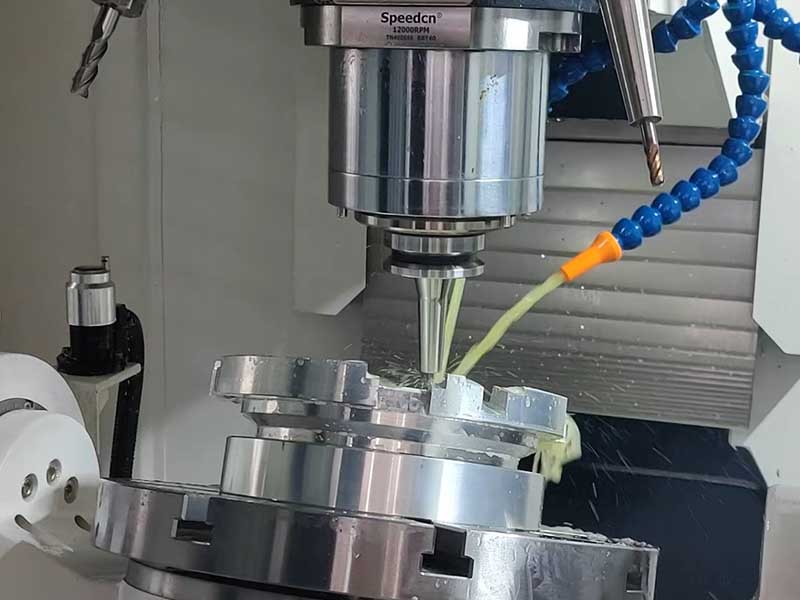
Features Of CNC Machining Process
| CNC Operation | Purpose |
|---|---|
| Milling | flat surfaces, slots and contours |
| Drilling | holes |
| Reaming | creating precision holes |
| Tapping | internal threads |
| Turning | precision outside and inside diameter |
| Boring | precision unregular holes |
| Threading | inside threads |
| Chamfering | improving edge sharps |
| 3D contouring | Complex curved surfaces |
What Is Die Casting ?
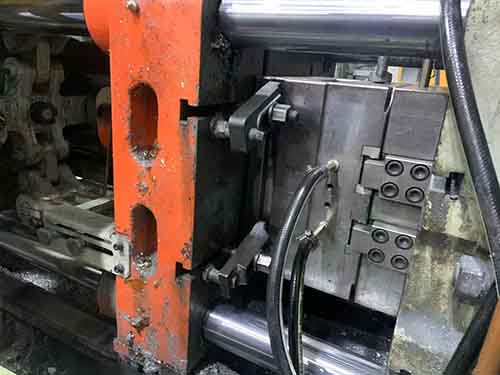
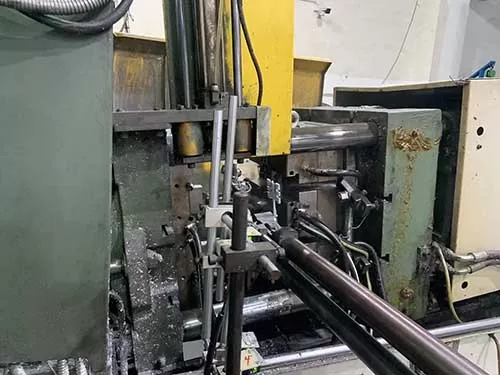
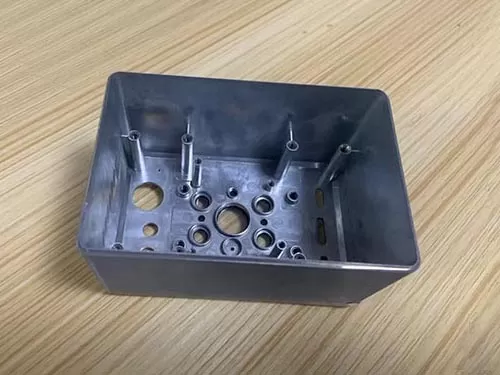
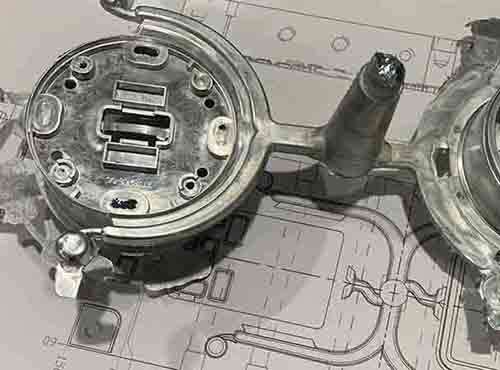
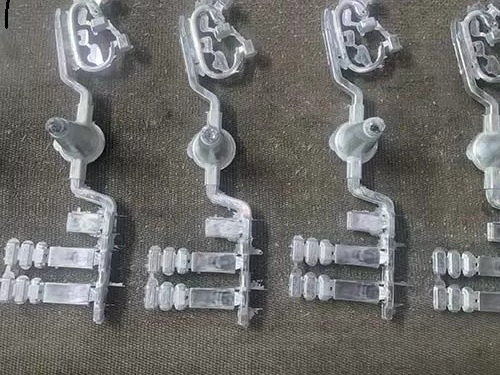
Die casting is the common forming precision cast parts process under high pressure. It requires proper die casting operation parameters,using die casting machine drive hydraulic power to push piston and inject high temperature molten metal into high precision steel tooling, and makes mold flow filling the die fully, and experience cooling and solidifying and eject the shaped cast part from the die. Different castable matal generate different surface roughness due to entrapped gas in mold flow, sometime more disgas release agent and high pressure and escape entrapped air and aim to avaccum die casting, but the rough surface require more secondary operations to improve the surface grain level of the cast parts.
Review Of Custom CAD File
After accepting the custom CAD file, engineers review the CAD file, then open the design drawing from client or design 3d model of product. And arrage DFM accessment analysis, improve and optimize the design of model of product, focus on model design constraint. Includes of wall thickness, draft angles, ribs and bosses, gates, runners, overflows, cooling channels, ejector pins, mold flow moldifying and optimization.
Mold Design And Precision Manufacturing
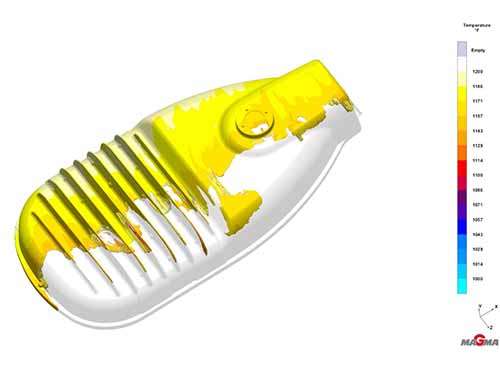
Tooling desing and manufacturing is account for most of die casting project, and require an initial big investment and increasing mass production production rate. Through mold flow simulation software, engineering can find some defects in advance, and improve mold flow movement and cooling channels, die casting operation parameters and molt temperature, at once make optimization of mold design, and finishing high performance mold design.
The CAD drawings of the optimized mold are delivered to mold technician, and under some advanced CNC machinining equipment, the mold technician fllow the requirement of the CAD drawings, make selection of the best mold steel material, uses these high precision machining equipment, process all mold components, like cnc maching centers, flat grinding machine, wire cutting machining facilities, EMD mold cavity and core process, at last assembly the mold,and begin addressing First Article Inspection. Depends on the functional requirement and environment demand, select different castable metal alloy, and begin trial order of the die casting project.
Mass Production
After the approval of mass production from customer, engineers implement die casting mass production. Working at normal temperature, the hot chamber die casting machine can responsible for the high effective mass production, ensure providing durable and high precision, miniature, wall-thinned and complex structural cast parts. However, working at extreme environment and high temperature, cold chamber die casting is ideal for medium or large sized, weightlight, high corrosion resistance and excellent thermal management precision cast parts.
Surface Finishing Treatments
Whenever hot chamber or cold chamber die casting cast parts, their near net-shape parts all allow secondery operations, aim to prolong the parts lifespan and apperance aesthetics. The common surface finishing treatments include shot blastering, grinding, polishing, various anodizing, plating and powder-coating & painting. They all accept precision inspection measurement after mass production is over.
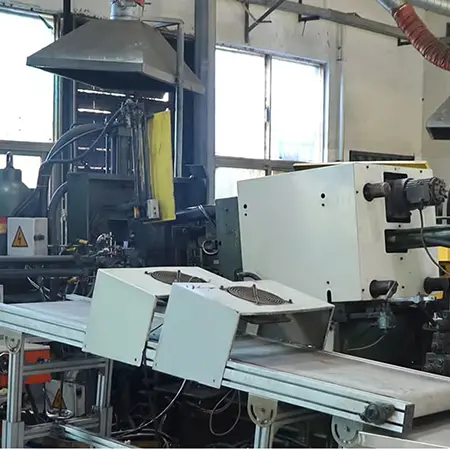
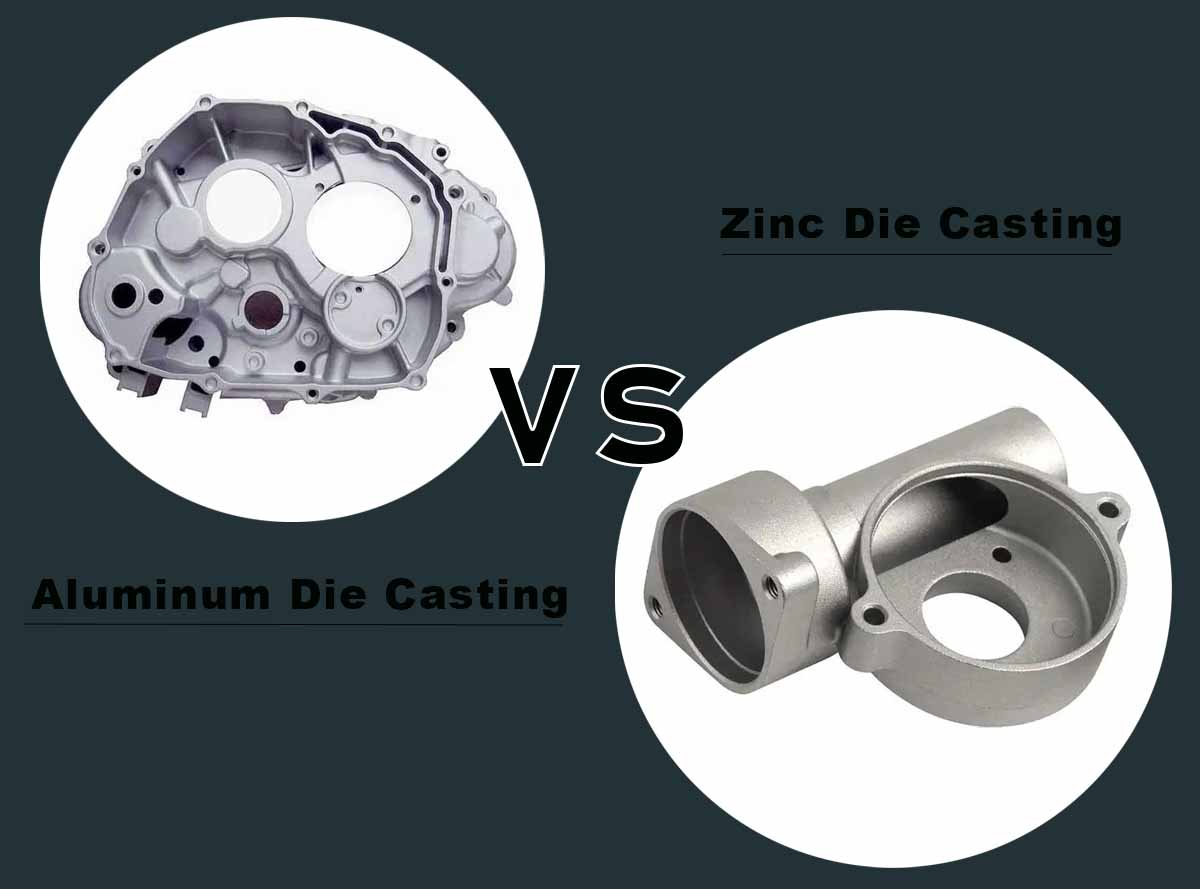
Zinc vs. Aluminum Die Casting
The common both manufacturing process have a constract comparison from zinc die casting and aluminum die casting.
| Feature | Zinc Die Casting | Aluminum Die Casting |
|---|---|---|
| Typical Process | Hot Chamber die Casting | Cold Chambe Die Casting |
| Metal Molten Temperature | 380-420℃ | 660-720℃ |
| Dimensional Tolerance | Very High | Excellent |
| Energy Consumption | Low | High |
| Application | Miniature | Medium or Large Sized |
| Surface Finish | High | good |
| Secondary Operations | Less | More |
| Surface finishing | Plating, powder-coating & Painting | Anodizing and other surface finishing |
CNC Machining vs Die Casting Cost
To make an informed decision, engineers should conduct a comprehensive cost analysis and technical assessment of both CNC machining and die casting. Rather than comparing only the initial manufacturing cost, they should evaluate the entire production process from prototype development to mass production.
Let us follow the below the key issues and have a detail analysis and accessment before a custom project
- Tooling investment – Initial mold or fixture costs and expected tooling life.
- Machine hourly rate – Equipment operating cost based on machine type and production efficiency.
- Material utilization – Material consumption, scrap rate, and recycling efficiency.
- Production cycle time – Manufacturing time required to produce one finished component.
- Labor requirements – Operator involvement, automation level, and labor cost per part.
- Surface finishing cost – Expenses for machining, polishing, plating, painting, anodizing, or other secondary processes.
- Production volume – Expected annual demand and total lifetime production quantity.
- Cost-per-part calculation – Total manufacturing cost allocated to each component.
- Break-even production quantity – The production volume at which die casting becomes more economical than CNC machining after amortizing tooling costs.
CNC Machining Cost : From Raw Material To Complete Manufaturing Cost
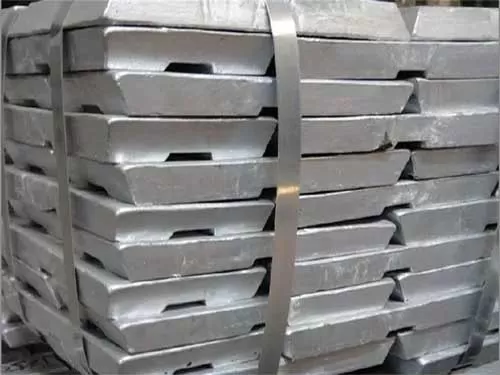
Metal Raw material for CNC machining is random, may be blocks, bars, strips, its cost is from the current market price. supplier purchase proper raw material, then consider that using cutting-edge equipment to make the first prototyping and verify machine hourly rate, production cycle time, labor requirements, surface finishing cost per part. Without any tooling fees, but cutting tool cost is required. For the cost of per cnc machined part is the cost of raw material + cnc maching production cost + secondary operation cost + surface finishing cost.
Die Casting Cost : From Tooling Development To Complete Manufaturing
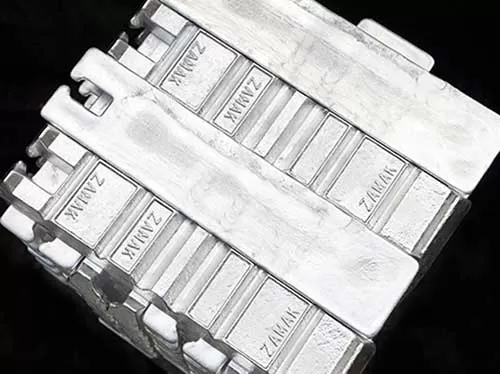
Raw material For die casting is designated, supplier should bought ASTM, EN standard castable metal raw material, such as Zamak, ZA, A380, A356 ACD12, Copper Alloys. After raw material is defined, OEM project manager and purchase manager should consider of the cost of casting die, and require supplier to develop the newly casting die to finish cost-efficiency mass production. then ensure the surface finishing for the cast partss so well.
For the cost of per die casting cast part is the cost of raw material + average die casting production cost + secondary operation cost + surface finishing cost + allocation of mold cost
Summarize the comparison for both processes
| Item | CNC Machining | Die Casting |
|---|---|---|
| Review Of CAD file Cost | Low design cost, Arrange DFM analysis and design cutting tooling path | High design, not only DFM analysis, mold flow analysis and cast die design |
| Raw Material Cost | Medium | High |
| Tooling Cost | Cutting Tooling Wear Loss Cost($20-$200) | Steel Die Cost($5000-$500,000) |
| Mass Production Cost | High Mass production cost due to long production cycle per part , requie dozen minutes to a few hours, ensure dimension accuracy and very smooth surface roughness. | Low mass production cost due to fast production cycle per part, only a few to dozen seconds, require cnc machining to improve its dimension and surface roughness. |
| Secondary Operation Cost | Accept shot blastering, polishing, then plating and coating, low secondary operation cost | High secondary operation cost, include of deburring, shot blastering, polishing, and allow plating and coating. |
CNC Machining vs Die Casting Cost by Production Volume
The quantity of the order for CNC machining is not limited, from single to hundreds of thousands parts. But purchaser and project manager always want the cost-efficiency mass production manufacturing process to replace it, because cnc machining production cost is too high, compare with cost-efficiency die casting process. Sometimes, production volume becomes important factor that decide which approch is adopted.
Production Volume Is Less 5000pcs, CNC machining Is Best
For custom OEM projects, rapid prototyping is often essential for testing product performance before mass production. When only a small number of precision parts are required, CNC machining can produce qualified prototypes within a few hours or several days, depending on part complexity and inspection requirements. After DFM evaluation, the engineering team can determine whether CNC machining is the most suitable prototyping method.
CNC machining requires little initial investment because no dedicated casting die is needed, and the primary tooling expenses are cutting tools and fixtures. It can also produce close-tolerance, high-precision components with fast turnaround times. For small production runs, particularly when the required quantity is below approximately 5,000 pieces, CNC machining can be economically attractive because the tooling investment for die casting may not yet be justified. As production volume increases, however, the cumulative cost of CNC machining can become substantial, making die casting increasingly attractive for suitable high-volume parts.
Production Volume Is Beyond 5000pcs, Even Up to 10,000pcs And More, Die Casting Is Selected
As CNC-machined part production volume increases, the cumulative machining cost can become substantial, especially when the parts require tight dimensional tolerances, excellent surface finish, and consistent quality throughout mass production. At this stage, OEM customers may conduct a DFM (Design for Manufacturability) analysis to determine whether die casting is a more economical production method.
Die casting requires a significant initial investment in precision tooling, but the tooling cost can be amortized across a large production volume. With properly designed and maintained dies, advanced die casting machines, and carefully controlled casting parameters, manufacturers can produce consistent, high-quality precision components at high production rates. Although die casting may involve multiple operations—including casting, trimming, deburring, CNC post-machining, surface treatment, and inspection—the unit cost can be substantially lower than CNC machining when production volume is sufficiently high.
For many OEM projects, when the production quantity exceeds approximately 5,000 pieces, die casting may become more economical than CNC machining, particularly for complex components with significant material removal or long machining cycles. However, the actual break-even point depends on the part geometry, material, machining time, tooling cost, secondary operations, and required annual volume. Therefore, OEM project managers should compare the total project cost and unit cost of both processes before selecting die casting instead of CNC machining.
Combining Die Casting and CNC Machining for Higher Production Efficiency
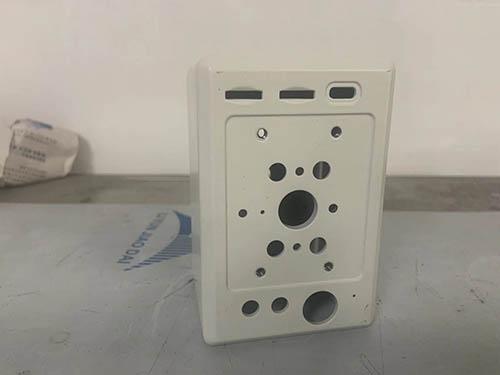
To achieve the dimensional accuracy required for assembly in automotive, communication, and other precision applications, professional die casting manufacturers often use high-precision CNC machining equipment to finish selected critical features of die-cast components. CNC post-machining can accurately process mounting surfaces, precision holes, threads, sealing surfaces, and other features that require tighter tolerances than can typically be achieved through the as-cast process alone. Because only the critical areas are machined rather than removing a large amount of material from the entire workpiece, this near-net-shape manufacturing approach can significantly reduce machining time, material waste, and overall production cost compared with producing the entire component through CNC machining from a solid billet.

Die Casting Project Quote
Find one of professional die casting factory to finish your project? If you want, please contact us by Email here !
Conclusion
Die casting offers a significant cost advantage for high-volume production because it provides a fast production cycle and consistent part quality throughout mass production. Although die-cast components may require secondary operations such as trimming, deburring, CNC post-machining, surface finishing, and inspection, the cost of these operations can still be substantially lower than producing the entire component through CNC machining from a solid billet.
CNC machining, in contrast, is particularly suitable for prototypes, single parts, and small trial production runs. It requires little initial tooling investment and can produce precision components with short lead times, making it an effective solution for rapid prototyping and initial product validation. As production volume increases, however, the cumulative cost of CNC machining can become significantly higher, especially for complex parts that require extensive material removal and long machining cycles.
FQA
Can CNC machining and die casting be combined ?
Yes, cnc machining is often used as secondary operation, can accurately process mounting surfaces, precision holes, threads, sealing surfaces, and other features that require tighter tolerances than can typically be achieved through the as-cast process alone.
Which process is better for prototypes ?
Among cnc machining and die casting process approaches, CNC machining can create satisfied prototype in a few hour and days, the precision single or small trial order is ideal for cnc machining. Some intricate geometries and complex structural parts are made by Advanced 4, 5 axis CNC machining center.
How much does die casting tooling cost ?
The cost depends mainly on the alloy, part size, geometry, number of cavities, slides or lifters, steel grade, dimensional requirements, surface finish, and expected production volume. Cast die for precision zinc die casting is focusing on miniature parts high volume production, The cost range is lower, range from $8,000–$25,000, whereas, cast die for aluminum die casting is higher due to more tooling steel material, range from $15,000–$60,000+.
At what volume does die casting become cheaper than CNC machining ?
The production cost of die casting is cheap when production volume is up 5000, even to 10,000pcs, because the mass prodcution for die casting is far lower than the cost of producing the entire component through CNC machining from a solid billet.